Thursday, 27 October 2011

The Inconvenient Marriage of Charlotte Beck - Kathleen Y'Barbo

GENRE: HISTORICAL ROMANCE
PUBLISHER: WATERBROOK PRESS
PUBLICATION DATE: JUNE 21, 2O11
RATING: 7 OUT OF 10 


Making her debut into London society, Charlotte Beck receives more than she bargained for when she tumbles out of a window into the arms of Viscount Alexander Hambly. The American heiress and English noble find their lives forever entwined as a result of the night’s events, much to the dismay of both parties. Charlotte is known for her inappropriate antics, and while she’d like to escape from the expectations of her parents – a suitable marriage, home and family – by attending university, her father has other plans for her. Charlotte is to marry Alex, whom her father has a business proposition for. Although her father insists that she is not simply a pawn in a financial deal, and that he believes Alex is the perfect match for her, being the only man who can control her and make her stop talking, Charlotte is still unhappy with these plans. It is only when her father and her betrothed promise her that she may attend university before getting married that she agrees to the arrangement. But four years is not as long as she expected, and when she returns to her parents’ home she discovers that no one has forgotten her impending marriage, and there is no escaping it – unless she can convince her new husband to agree to an annulment. But Alex has not forgotten Charlotte and how amusing her teenage antics used to be. Without either of them realising it, Charlotte has already stolen his heart, and he is determined to show her exactly why she should remain married to him.

Charlotte is the sort of character will have you laughing out loud, no matter how restrained you try to be while reading this book. Her escapades – entirely inappropriate for a young woman of good breeding – were hilarious to read about, as were her interactions with Alex and his family. Alex and Charlotte have brilliant chemistry together, even if neither of them realised it to begin with. I thoroughly enjoyed the first part of this book, where Charlotte and Alex slowly get to know each other through Charlotte’s little accidents and near social suicides. They are certainly unusual characters for a historical novel, with Alex’s interest in astronomy and Charlotte’s painting skills being well thought out and described. In a way, Charlotte and Alex are two misfits in the world of courtship and balls, making them perfect for each other.

I also enjoyed the dual setting of this novel and reading about the characters experiences in both London and Denver. I’ve not read many historical novels written by American authors but set in Britain, so this definitely made a nice change. It was interesting to read about the differences between London and New York society, the debutantes, clothing of the period and expected etiquette for young ladies. The pieces of etiquette wisdom given at the start of each chapter are absolutely hilarious, as are Charlotte’s attempts to succeed in achieving them.

While I did love the characters, settings and events of the first part of this novel, I really felt let down by the latter part. As the second section of the novel begins, Charlotte returns from university to live with her parents pending her marriage to Alex. I’d been really looking forward to reading about Charlotte and Alex managing to adapt to married life, which I imagined would be a lot of fun to read about, giving their shenanigans in the first part of the book. However, in the four years that have passed between Part I and II of the novel, Charlotte’s character had undergone a complete transformation. I imagine that Kathleen simply wanted to show how Charlotte had grown up, but she had none of the spunk or ingenuity of the previous Charlotte. To be honest, most of the time she just came across as grumpy or selfish, and the chemistry between her and Alex was completely gone. Alex, on the other hand, was exactly the same as he had been in the first part of the book, which just succeeded in showing how entirely different Charlotte’s character was.

My other complaint with the second part of the book is that Charlotte suddenly has a fear of getting married, brought on by something mysterious that apparently happened to her biological mother during her marriage to Charlotte’s father, who is now remarried. This mysterious “something” had never before been alluded to in the book (or if it had, not enough for me to pick up on it) and seemed to come completely out of the blue. It was as if the author had felt that Charlotte needed a reason for her distrust of marriage, and threw this fear into the story in order to validate Charlotte’s behaviour. To make everything even more confusing, the whole issue is wrapped up two or three chapters after Charlotte’s fear is first revealed, when she has a discussion with her father and coincidentally just happens to come across a letter from her grandfather that explains everything. Then, of course, her fear is gone and she can stop being so harsh to Alex. Maybe if Charlotte’s misconceptions about marriage and the mystery surrounding her father’s first wife had been incorporated better into the story as a whole I wouldn’t have minded this part of the novel so much, but as it is I really felt that this part of the plot needed to be expanded in order for it to feel credible and not so rushed. On the whole, I think that the second section of the book needed to be at least fifty pages longer as all of the events felt a bit rushed and quite detached from the first part of the book. At times, it actually felt like I was reading an entirely different book.

While The Inconvenient Marriage of Charlotte Beck began with a promising start, the section of the novel that focused on the actual marriage between Charlotte and Alex was a letdown. The chemistry between the characters petered out due to Charlotte’s change in personality, and events were rushed to their conclusion by the introduction of a mysterious and previously non-existent plot device that was over and done with far too conveniently. I’m afraid that I was a bit disappointed by this book, although more the second section than the book as a whole. Charlotte and Alex were originally wonderful characters, but their personalities seem to have got a bit lost along the way. Although I didn’t love this book, I would consider reading others by Kathleen Y’Barbo in the future as she creates great characters and families. Perhaps the difficulties I had with this book were not due to her writing but the four year gap between the two parts, in which much goes unexplained.

Review title provided courtesy of Waterbrook Press.

Wednesday, 26 October 2011

Waiting on Wednesday: Beyond Hope's Valley by Tricia Goyer


Waiting on Wednesday is a weekly event, hosted at Breaking the Spine, that spotlights upcoming releases that we're eagerly anticipating.

And what am I eagerly awaiting? Despite the fact that my bookshelves (plus attic and various boxes under my bed) are bulging to the seams, and my Kindle is full of freebies and review books, there are so many 2012 releases that I can't wait for. Here's one of them:

TITLE: BEYOND HOPE'S VALLEY
AUTHOR: TRICIA GOYER
SERIES: BIG SKY #3
PUBLISHER: B & H
PUBLICATION DATE: APRIL 1, 2012


After an extended stay in Montana, where Amish traditions are different than in her home state, Marianna Sommer returns to Indiana for two reasons, first to help her brother and his girlfriend prepare for a baby and their wedding. Second, to plan her own wedding to Aaron Zook — a marriage she’s been dreaming about ever since childhood. And yet, although she had missed the idyllic farms and families of her upbringing, Marianna is surprised that Indiana is somehow making her long now for Montana.

As months pass, secrets that were hidden in winter’s frozen grasp thaw and take on a life of their own. The truths about a child, about a past relationship, and about God’s plans are being revealed. Walking through a valley of questions, Marianna must hold on to hope as she decides where and with whom her heart truly belongs.

If you've not yet discovered this series from Tricia Goyer, start with Beside Still Waters immediately and I guarantee that you'll be as addicted to reading about Marianna's experiences in Montana as I am! I recently read the second book, Beyond Wooded Paths (so look out for a review soon!), which included an excerpt from the conclusion to the trilogy and I have to say, I am most intrigued to find out whether Aaron has some secrets he's been hiding from Marianna and how her brother and girlfriend manage with their upcoming wedding and baby. April 2012 is very, very far away though, so it'll be a while before I get the chance to read the final book in this compelling series.


What books are you looking forward to in the new year?

Double Take - Melody Carlson

GENRE: YOUNG ADULT/AMISH
PUBLISHER: REVELL
PUBLICATION DATE: JUNE 1, 2011
RATING: 8 OUT OF 10


How could two girls who look so alike be so different? When rich city-girl Madison Van Buren runs into her lookalike at a cafe in an Amish community in Pennsylvania, she begins to wonder how her life would have turned out if she's been born into the slow-paced country life of Anna Fisher. Stressed out by college choices, a possessive boyfriend, a needy best friend and her divorced parents, Madison sees Anna as an escape into a simpler way of life. Anna is tempted by the lure of freedom from responsibilities, and not having to constantly do chores and care for younger relatives. Living in New York would give her the chance to find her old boyfriend, Jacob, who left the Amish several years ago and hasn't been in contact. But switching lives turns out to be a lot more complicated than Madison and Anna imagined, and their plans for a carefree escape from their troubles doesn't work out quite as they expected. Both of them have something to learn about life, relationships and even God.

Those who read my reviews may have noticed that I’m not particularly interested in YA fiction. But when I saw that Melody Carlson, Queen of Christian Teen Fiction, was jumping on the Amish bandwagon (or buggy, as may be more appropriate) I couldn't help but request a review copy. And despite my doubts about how well Amish fiction would transfer to the YA market - particularly with a cover that's just a tad too cheesy for my liking - this is definitely one that I'd recommend. It took me a few chapters to adapt to Melody's style of writing and fit back into the mindset of a teenage girl, but once I found myself settled in the story, I didn't want to put it down.

Ignoring the plausibility of two girls looking so alike and just happening to run into each other, I loved the "Parent Trap" style plot of this book. Who hasn't wondered what their life would be like in a different place? As a British teen captivated by American TV shows and books, I used to daydream about attending an American high school like the fictional ones I was so familiar with. Like Anna, I believed my life would be so much more exciting away from home. But Anna soon finds that life in a city is much more overwhelming than she thought, and that it's not going to be easy finding Jacob in a city packed full of people. Plus, Madison's phone is difficult to operate, the TV shows seem mindless and none of Madison's clothes are remotely modest. She also has to deal with Madison's boyfriend, whom she ropes into helping in her search for Jacob, and an old friend of Madison's who immediately figures out that Anna is an imposter.

Madison, on the other hand, discovers that the "simple life" isn't as relaxing as it sounded. Making up some ridiculous story about how she hit her head on the ice while skating and has forgotten a lot of basic Amish life skills, Madison has to learn how to do basic chores like cooking and washing dishes, as well as looking after half a dozen cousins. Thankfully, Anna's aunt and uncle don't seem to think that there's anything weird about "Anna" and are just thankful for the help while the aunt, Rachel, is nearing the end of her pregnancy. There are some really touching scenes between Madison and Rachel, who isn't popular in her community because she isn't the best homemaker and seems to be slacking in a lot of areas that other Amish women relish in. Madison - who has never had to wash her own dishes before, let alone bake a pie or change a diaper - admires Rachel and helps the other women in the community to appreciate her “aunt” and help her in the departments where she's lacking. There's also a little romance between Madison and a local boy who helps on the farm. It's not entirely necessary to the plot, but shows how teenagers can get carried away by their romantic daydreams.

I actually ended up preferring Madison's Amish adventures to Anna's search for her old boyfriend, mainly because I felt that Madison had more to learn from her experiences. Anna gets a bit of a shock when she meets Jacob and discovers that he really has become an Englisher, and it shakes her teenage fantasies about her and Jacob ending up together, despite him leaving their community. I'm sure every woman can remember a time when they thought a teenage crush would turn out to be the man of their dreams, so Anna's story is quite easy to relate to, if a little bit anticlimatic. On the other hand, Madison does what many Amish fanatics fantasise about - convert to the calmer way of life. But what is there that’s calm about cow stalls, outhouses and home births? Madison experiences a serious culture shock that causes her to rethink her “real” life, and make some changes when she returns to New York. Her experiences with Rachel's family are quite amusing, but I don't know whether I would have reacted any better in her place. While Anna's situation was more relatable, Madison's definitely made for a more entertaining read.

Despite my usual wariness of YA novels, Melody Carlson may have actually made a convert out of me. This is definitely a book that I'd want my teenage daughter to read, if I had one, and is one to pass on to those younger sisters and daughters who try to sneak a peek at your Beverly Lewis novel. Amusing and very true to life, Double Take is one for both teenage girls and the older Amish fans, particularly those who like to fantasise about living the simpler life.

Review title provided courtesy of Revell.

Tuesday, 25 October 2011

Anna's Gift - Emma Miller

GENRE: AMISH ROMANCE
PUBLISHER: STEEPLE HILL/HARLEQUIN
PUBLICATION DATE: SEPTEMBER 9, 2011
RATING: 9 OUT OF 10 


In the latest addition to Emma Miller’s Hannah’s Daughters series, Anna Yoder finds herself receiving a surprising marriage proposal. After watching all of her older sisters marry and leave the family home, Anna longs to be swept off her feet by a suitor, but believes this will never happen since she doesn’t have the pretty face or slim figure of her attractive sisters. So when handsome widower Samuel Mast asks her to marry him, Anna can’t help but wonder if he’s only interested in finding a mother for his children. As much as she enjoys spending time with Samuel and his children, teaching the girls to bake and cooking for his family, Anna isn’t quite ready to say yes. With the whole community speculating his proposal, she needs to know whether or not Samuel truly cares for her before she can make a decision. Soon, Samuel finds that he’s having to go through the motions of teenage courtship – and getting to know his potential bride a lot better!

Having read Courting Ruth, the first novel in this series, a couple of months ago I was pleased to have the opportunity to catch up with the Yoder sisters again. Although I skipped on to the third book in the series, I can’t say that I felt like I’d missed anything vitally important to the plot. As with all Love Inspired novels, Anna’s Gift is designed to be read as a standalone novel, although readers who are familiar with Emma Miller’s books will enjoy seeing brief appearances from previous characters. There are also some new additions in this book, as Anna’s younger sisters return from caring to their aging grandmother, and the sisters, grandmother and an elderly aunt return to Delaware to move into the Yoder home.

While I don’t think that I enjoyed Anna’s tale of courtship as much as Ruth’s, it was still a very sweet story. Anna was a very endearing character, and the development of her relationship with Samuel made a very fun read. This book had two of my favourite contrivances – snowstorms and children. When the community is struck by heavy snow while Anna’s mother is out of town, Anna finds herself spending a lot of time with her Samuel and his family, who are their closest neighbours. While normally an unmarried Amish couple wouldn’t be allowed to spend so much time together unsupervised (Samuel’s children and Anna’s learning disabled sister would not count), this set-up allowed for Anna and Samuel to get to know each other better before Samuel broached the subject of married to Anna’s mother. It’s not until later in the book that the have a proper courtship, which is a strange experience for both of them – Anna having never had a suitor before despite being older than the other courting teenagers, and Samuel having been previously married. It was interesting to read about a couple in such a situation, as few Amish romances have this set up of an older, widowed man marrying a much younger woman.

There were two very realistic issues explored in Anna’s Gift, the first of which related directly to Anna’s character. Not being slender like her sisters, Anna has always felt unworthy of a man’s attention, which is further proven by the fact that none of the boys in her community are romantically interested in her. So when Samuel expresses his desire to marry her, Anna can’t help but wonder if he just wants someone to cook, clean and look after his kids. After all, who would want her – practically an old maid, a bit larger than the other women her age and clearly been on the shelf for a while? Her aunt and cousins don’t make matters easier for her but continually suggesting that Samuel could never want her for who she is, making Anna more worried about whether she’s about to enter a marriage of convenience. While the concern over marrying someone for comfort rather than love is one often discussed in Christian novels – particularly historical romances – few realistically portray a young woman’s anxieties over whether her appearance makes her deserving of a husband. As someone who was always a bit too gangly and skinny as a teenager, with the added bonus of glasses and braces, I can sympathise with Anna’s worries over her looks, and I’m sure many other readers will find this makes her a relatable character.

The third book in the Hannah’s Daughters series also sees the return of Anna’s younger sisters, along with her grandmother and great aunt, opening up the floor to explore another very relevant issue – dementia. While it’s never overtly explained what illness Anna’s grandmother suffers from, or whether it is indeed Alzheimer’s, all of the women in Anna’s family have to adjust with their grandmother’s steady decline. From making inappropriate comments to strangers in the supermarket to believing that her son is still alive, she takes her toll on the Yoder family, particularly Hannah, who her mother-in-law is always finding fault with. I found the treatment of Anna’s grandmother very touching, especially seeing how the Amish make caring for their elderly relatives a priority in their lives. This part of the story will particularly resonate with anyone who has witnessed a family member struggling with dementia or Alzheimer’s, and some of the grandmother’s escapades will definitely put a smile on your face!

Not all Christian romance readers are fond of the shorter, category novels from Love Inspired, but I do encourage fans of Amish fiction to give Emma Miller’s series a try – you might find yourself pleasantly surprised! Anna’s Gift would make the perfect stocking filler for the romance fan or an introduction to the genre for a teenage girl. I thoroughly enjoyed the latest instalment in the Hannah’s Daughters series and definitely hope to see more from Emma Miller in the future.

Review title provided courtesy of Steeple Hill at Harlequin. 

Monday, 24 October 2011

The Journey - Wanda E. Brunstetter

GENRE: AMISH
PUBLISHER: BARBOUR PUBLISHING
PUBLICATION DATE: APRIL 1, 2011
RATING: 4 OUT OF 10 


When the chance to work as a carpenter in an Amish community in Kentucky arises, Titus Fisher jumps at the opportunity. Always in the shadow of his perfect twin brother, Timothy, and watched like a little child by his mother, Titus feels it’s time to find where he belongs in the world. And since this offer follows his girlfriend Phoebe’s announcement that she still isn’t ready to join the Amish church, Titus feels that perhaps it would do him some good to be away from the ties he has back home in Pennsylvania. Soon he’s settling into the rhythms of life in Kentucky, despite the dilapidated trailer he lives in and his lack of a buggy, and he strikes up a good friendship with the Yoder family, who are employing him to work in their carpentry shop. But it takes him longer to warm up to Suzanne Yoder, an unconventional young woman who prefers being in the outdoors and woodwork to cooking and sewing. But Suzanne looks just like Phoebe, and Titus can’t help but look of Suzanne and remember how Phoebe broke his heart when she went to explore the English world. Will Titus’s memories of Phoebe put a rift between him and Suzanne, or will he learn to let go of the past and discover what God has planned for him in Kentucky?

I will advise that while I tried to start this book with an open mind, I’ve never been a big fan of Wanda Brunstetter. While she’s incredibly popular in the Amish genre, which contains many of my favourite books, I’ve yet to figure out what is so appealing about her books. While many of them contain standard romance plots, I often find her writing stilted and her characters lacking in personality. Despite this, I determined to give her works another try with The Journey, which many of my friends have praised. The plot of this novel, while being fairly predictable, did sound like it had promise, particularly with Suzanne being such an unusual character for an Amish novel.

Unfortunately I found it very difficult to enjoy this book. As with previous Brunstetter novels (On Her Own, Plain and Fancy and Kelly’s Chance, to name those that I’ve read) I found the dialogue very stilted and fake-sounding, as were the internal thoughts of many of the characters. This was particularly jarring as the majority of The Journey is dialogue. I would say that at least 80% of this book was dialogue, and while normally I love conversation-driven novels, there was barely any description at all. Books in the Amish genre really need descriptions of the scenery and day-to-day life to make them seem authentic. Sadly, The Journey was very lacking in this department and could really have been set anywhere, if for the occasionally Pennsylvanian Dutch word and mention of a buggy. The Penn Dutch speech was pretty irritating in that whenever a character said anything in Dietsch, another character would then repeat the same sentence back almost word for word so that the reader would understand what the word meant. This sounded incredibly fake, and happened too often for me not to notice.

The plot jumped around too much for my liking, leaping back and forth between Titus in Kentucky and his family back home in Pennsylvania, and occasionally over to Phoebe in California. It seemed really unnecessary to include Phoebe’s sections as they really didn’t add much to the plot, other than to show that she wasn’t enjoying herself in the English world. The scenes in Pennsylvania were much the same, and seemed to repeat a lot of what had happened to Titus in Kentucky as word of his new life spread to all of her relatives. More often than not, these sections ended up detracting from the plot rather than adding to it.

There were a lot of dramatic events in this book, far too many than is realistic. On several occasions characters are nearly run off the road in their buggies - by a motorbike, a horse and wild dogs - and if these events had been connected I wouldn't have minded, but they weren't! These three events were never given any sort of plausible explanation that linked to the plot, and seemed mainly to function to bring Titus and Suzanne closer together in the aftermath of their experience. The first two events I shrugged off, but I’ll admit that I nearly laughed out loud at the appearance of the feral dogs. There's also a situation surrounding some stolen money which is cleared up far too quickly and easily to be at all believable, and then is never mentioned again by any of the characters. It felt like the author kept trying to insert some sort of mystery into the book but then resolved the situations too fast to actually make the book mysterious. And don't even get me started on all the deaths and tragedies that occurred with this family – is it really possible for one family to suffer so many traumas? Some of them seemed quite unnecessary, and the way that the characters dealt with them seemed rather offensive to anyone who has lost a relative or a child.

I have a few minor complaints about this book which, coupled with my issues with the dialogue, plot-jumping and unrealistic nature of some of the events in this book, ended up taking away from what could have been a fairly enjoyable reading experience. Firstly, The Journey apparently follows on from another series of books as numerous references are made to Zach having being kidnapped as a child. Yet for new readers, this situation isn’t explained very well and left me feeling very confused. There’s nothing in the synopsis to suggest that this series follows another one, so new readers beware of this. I’d also like to caution that while this book is marketed as Christian fiction, the spiritual aspect is very minor. The characters only ever talked to God when they were in dire need of help, but otherwise never mentioned Him, which is particularly unsettling for a novel about the Amish where God is normally central to their community and way of life. There’s a semi-conversion scene towards the end of the novel, which is one of my pet hates in Christian fiction because it is so rarely done in a tactful and satisfying manner.

While I did not enjoy this novel, I have read several glowing reviews of it and would encourage potential readers to read those before making a final decision on whether to read The Journey. As much as I hate to write a critical review, this is my honest opinion and I think it necessary to share my views on a book from one of my favourite genres. I’ve read many wonderful new books from this genre that have released this year, and The Journey just doesn’t measure up to novels from newcomers like Kelly Long, Barbara Cameron or Ruth Reid. On a more positive note, fans of Brunstetter will probably enjoy this book as it’s much the same as her earlier novels, but this also means that readers who dislike her work will probably have the same reaction as I did.

Review title provided courtesy of Barbour Publishing.

Sunday, 23 October 2011

Nobody's Child - Austin Boyd

GENRE: INSPIRATIONAL
PUBLISHER: ZONDERVAN
PUBLICATION DATE: AUGUST 1, 2011
RATING: 6 OUT OF 10 


Faced with numerous mortgage payments and medical bills, Laura Ann has to decide whether to risk losing the family farm or sell the one commodity in her means – her eggs. Sharing her secret with no one for fear of shame, Laura Ann makes several trips to harvest her eggs so that she can keep her daddy’s farm within their immediate family and stop it from falling into the hands of her manipulative and abusive uncle. But when a woman turns up on her doorstep claiming that she’s carrying Laura Anna’s child, Laura Ann is forced to face the full implications of her actions. How long can she keep her secret?

Just to set the scene here, I’m not your typical American reader. To begin with, I’m actually British, and what drew me to this book was the concept of harvesting eggs in exchange for money. In Britain there is absolutely no financial benefit to donating eggs, sperm or even blood; “donors” truly are making donations. So I started this book with a degree of ignorance towards this world in which reproductive organs can be used to produce money. This may mean that I was more shocked and surprised by the situations novel than your typical American reader, who will be more aware of these events than I am. But I’m sure that even those who are familiar with this system will be struck by this book and made to consider the consequences of the decisions that young women such as Laura Ann find themselves making.

Initially the story was very slow moving, and I actually put it down and read something else for a few days as a lot of the early chapters were spent developing Laura Ann’s character and introducing the members of her family. Personally, I felt that the plot didn’t really start until a good third of the way into the book. A lot was alluded to about Laura Ann’s financial problems and how she’d managed to pay for the mortgage and her dad’s healthcare bills. Yet despite all of the build up to the main plot and introduction of the main characters, I still felt like I didn’t really know the characters when the plot did get rolling. Laura Ann was fairly well developed, and her boyfriend, Ian, was a believable enough character, if lacking some substance. But I had this niggling feeling in the back of my mind as I read the book, as if I should be connecting with all the characters on a deeper level and had missed something essential. In a way it was almost as if I’d dropped into the middle of the series and had missed getting to know Laura Ann’s family members and neighbours. Even Laura Ann felt a bit distant, and I’m hesitant to suggest that this is because the author is male and she just didn’t come across as a hundred-percent realistic to the female reader.

Fortunately, the story really picked up around the halfway mark and I started to take an interest in the characters. The pacing in this book is rather bizarre, with the incredibly slow start, then a jump as the plot gets started, followed by a giant leap in the last eighth of the book in which everything seems to suddenly speed up and there’s a rush to the climax. The book definitely got a lot more interesting once Sophia arrived with the news that she was carrying Laura Ann’s child. Sophia was a fascinating character, maybe one of the most realistic out of all the characters in the book. There was still a slight feeling of detachment, which may be because the author didn’t want readers to get so attached to someone who wouldn’t be around for the whole book. To readers who have actually read the synopsis of this book, which will hopefully be most, the outcome of Sophia’s visit is quite easy to predict and hangs ominously in the background. But even this didn’t prevent the conclusion from being heartbreaking, particularly as Sophia was the character I’d become most attached to.

I’m impressed with the way that the author introduced the topic of harvesting eggs in exchange for money without verging on being “preachy” or pushing his own personal views on the readers. The court case at the end of the book enabled various opinions on this topic to be tossed around, allowing the reader to make their own decision on this ethical dilemma. Such sensitive issues can be tricky to discuss, even in the Christian community, and I do commend Austin for writing a novel which presented all of the facts without overtly presenting the “right” and “wrong” stances on this issue. That said, there was one moment at the end of the court case where the judge made a sweeping comment about whether or not children are viewed as a blessing or simply a commodity. While this statement was entirely valid and one that I myself have mused on in the past, the way in which this question was presented to the reader felt a little forced, as if the author wished to sum up the debate that had been going on throughout the book.

While Nobody’s Child isn’t one of the most gripping novels I’ve read this year, it enlightened me to many of the facts about the darker side to fertility treatment and the women who find themselves offering their reproductive organs in return for cash. IVF has long been a tricky issue in the Christian community, but Austin Boyd refrains from choosing one side in this debate, instead presenting readers with a realistic situation through the character of Laura Ann. I would recommend this to fiction readers who want to know more about the ethical implications behind IVF and harvesting eggs, but aren’t quite ready to go wading through journals and textbooks to uncover the details.

Review title provided by Zondervan.

Saturday, 22 October 2011

What else have I been reading?

Due to the vast amount of novels I've received to review over the last few months, I've become a bit lazy about writing full reviews of the books I choose to read for pleasure. So, without further ado, I present some condensed reviews of my summer reading, most of which was consumed on the wonderful 90 minute commute I had to and from my summer job every morning and afternoon! Plenty of time for reading, but sadly not enough to write full reviews. Enjoy!


READ: JULY 5 - 6, 2011
RATING: 9 OUT OF 10


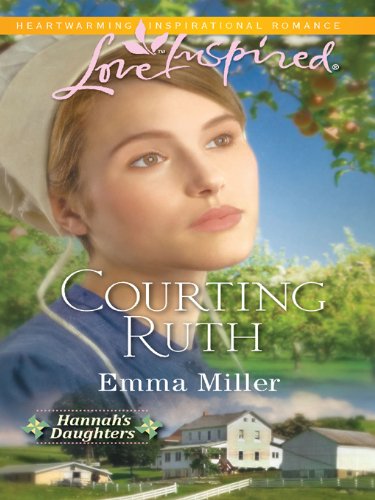
Amish widow Hannah Yoder prays her daughters will each find a husband someday. Still, sensible Ruth believes it's God's will that she stay home and help care for her younger sisters. But when a handsome young man comes to Kent County, Ruth starts to rethink her plans. Not yet part of the church, Eli Lapp is allowed to run wild. Yet something in Ruth's sweet smile and gentle manner makes him yearn to settle down—with her at his side. Can Eli convince her that their lives should be entwined together on God's path?


I ended up completely adoring this book, all of the characters were unique and realistic and I'm fairly certain I was grinning my head off when I finished reading it today on the bus. A simple plot for the people who live the simple life, but not entirely predictable. Ruth seemed a bit young for her age in places and some problems could have been resolved with a conversation, but I did love the setting, the family and all of the secondary characters. Definitely going to be reading the other books in the series. 


* * *


READ: JULY 8 - 9, 2011
RATING: 7 OUT OF 10


This Christmas, Emily Merkle (call her Mrs. Miracle!) is working in the toy department at Finley's, the last family-owned department store in New York City. And her boss is none other than…Jake Finley, the owner's son.
For Jake, holiday memories of brightly wrapped gifts, decorated trees and family were destroyed in a Christmas Eve tragedy years before. Now Christmas means just one thing to him—and to his father. Profit. Because they need a Christmas miracle to keep the business afloat.
Holly Larson needs a miracle, too. She wants to give her eight-year-old nephew, Gabe, the holiday he deserves. Holly's widowed brother is in the army and won't be home for Christmas, but at least she can get Gabe that toy robot from Finley's, the one gift he desperately wants. If she can figure out how to afford it…
Fortunately, it's Mrs. Miracle to the rescue. Next to making children happy, she likes nothing better than helping others—and that includes doing a bit of matchmaking!
This Christmas will be different. For all of them.


I didn't enjoy this quite as much as Mrs Miracle but it was a lot better than A Cedar Cove Christmas. For a novella, this book included a significant amount of character development, enough to make me really care about the characters and their struggles. And as with Mrs Miracle, I really liked the quotes at the start of each chapter. Obviously, this is a fairly predictable, romantic Christmas tale but it didn't verge on being cheesy at any point, and had interesting secondary characters to keep the story original. My one complaint would have to be the fact that the main character agreed to buying her nephew a £250 Christmas present! The only time I've had a present that cost that much was when my parents bought me a laptop when I went to university, never as a child. Whatever happened to dolls and bricks and footballs? Although the rest of the message was good, this present seemed to matter far too much to the main characters and it didn't seem like a reasonable thing to be spending money on, especially when Holly was struggling financially. While I did really enjoy this story, the obsession with the expensive robots did irk me.


* * *

READ: JULY 11 - 14, 2011
RATING: 6 OUT OF 10

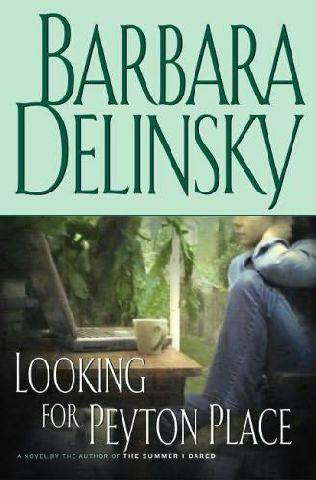
Grace Metallious, the author of PEYTON PLACE, a revolutionary novel about sex and secrets in small town America, inspired Annie Barnes to leave Middle River, the tight knit community that believes itself to have been Grace's model, and pursue a career as an author. Now, Annie's success has allowed her to distance herself from the world she left behind -- and from her family, who are still smarting from their decades-old associations with Grace's PEYTON PLACE. But after her mother dies under circumstances Annie can't help questioning, Annie returns to her home in New Hampshire to search for answers. When she discovers evidence of dangerous pollutants emanating from the local paper mill -- poisons she suspects contributed to her mother's fatal illness -- Annie finds herself butting heads with many of the town's inhabitants -- including her sisters, who are strangely apathetic about the incriminating evidence Annie discovers. All the while, Annie must war with the memory of Grace Metalious -- and the realization that not much has changed in small-town life since Grace wrote her groundbreaking book.

I'm afraid I didn't enjoy this as much as other Barbara Delinsky novels. It was mainly written in first-person POV from one of the most arrogant, self-assured main characters I've ever known, yet I still never felt like I got to know her properly. Barbara Delinsky has written some wonderful novels in third-person POV and I just don't think she can pull off first-person, it isn't in keeping with her style. And while the mystery was pretty interesting - although perhaps a bit too similar to the movie of Erin Brockovitch's life - the story didn't have the same saga and scandals of Delinsky's best novels. I think she tried to do something new with this book and strayed too far from her niche. I expect that those who are interested in Peyton Place and its history would enjoy this book more than I did, but I found the references a bit forced in places and the idea of Annie "conversing" with Grace was just too weird for me. I did want to keep reading to find out whether there was mercury poisoning, but I just didn't connect with the characters in this book. 

* * *

READ: JULY 22, 2011
RATING: 8 OUT OF 10

Miriam Lapp, who left the Amish community in Pennsylvania three years ago, is heartbroken when her sister calls to reveal that her mother has died suddenly. Traveling home to Pennsylvania, she is forced to face the heartache from her past, including her rift from her family and the break up of her engagement with Timothy Kauffman.Her past emotional wounds are reopened when her family rejects her once again and she finds out that Timothy is in a relationship with someone else. Miriam discovers that the rumors that broke them up three years ago were all lies. However, when Timothy proposes to his girlfriend and Miriam's father disowns her, Miriam returns to Indiana with her heart in shambles.When Miriam's father has a stroke, Miriam returns to Pennsylvania, and her world begins to fall apart, leaving her to question her place in the Amish community and her faith in God.

Amy Clipston is one of my favourite Amish authors and the third book in her Kauffman Amish Bakery series was a excellent addition, but I felt like something was missing. The spark that had made me rave about A Gift of Grace and A Promise of Hope just wasn't there. It took me a while to figure out what it was about this book that had irked me, and ultimately I think it was the lack of communication between Miriam and Timothy. There were so many times when I wanted to grab them, sit them down in a locked room and make them talk everything out! While I realise that this book probably wouldn't have existed if they'd ever bothered to confront each other to begin with, the number of misunderstandings and missed opportunities did eventually get quite annoying. I just didn't connect with Miriam the same way I did with the heroines from the first two books in the series, and perhaps the lack of communication between her and Timothy contributed to this since it made her seem a bit immature in comparison. However, I did really enjoy reading this book (other that a few frustrating moments!) and it was quite impossible to put it down at times. Despite the issues I've mentioned, this was a good addition to the series and I'm looking forward to #4 and finding out what's happening to Rebecca's nieces. This is a lovely family and community to read about, and even if I didn't enjoy this book as much as the previous novels I'd still rate it 8 out of 10 for the compelling storyline and great characters.

* * *

READ: JULY 31 - AUGUST 2, 2011
RATING: 9 OUT OF 10
A dusty carved box containing two locks of hair and a century-old letter regarding property in Switzerland, and a burning desire to learn about her biological family lead nurse-midwife Lexie Jaeger from her home in Oregon to the heart of Pennsylvania Amish country. There she meets Marta Bayer, a mysterious lay-midwife who desperately needs help after an Amish client and her baby die.
Lexie steps in to assume Marta's patient load even as she continues the search for her birth family, and from her patients she learns the true meaning of the Pennsylvania Dutch word demut, which means 'to let be' as she changes from a woman who wants to control everything to a woman who depends on God.
I loved this book! The start of a fantastic series. I've only read one book from Mindy previously (Secrets of Harmony Grove) and I'd found the mystery to be quite complex and a little too dark for my liking, so naturally I was intrigued to see what her joint series with Leslie Gould would entail. While the complex storyline and mystery aspect remained, I felt far more connected to the characters in this book. It was fascinating to learn a bit about the Anabaptist history of the Amish (which is dealt with in more depth in #2) and trying to figure out the family tree was a lot of fun. A wonderful book about family relations and figuring out who you are and how your family defines you. I'd definitely recommend this book to Amish fans, particularly those who're looking for something different from the usual romantic storyline. Romance didn't really feature in this book, focusing more on the relationships between the women in the family and uncovering Lexie's past. So if you'd like to try an Amish novel but aren't a massive fan of romantic fiction, this is definitely the one to start with.