GENRE: AMISH
PUBLISHER: BARBOUR PUBLISHING
PUBLICATION DATE: APRIL 1, 2011
RATING: 4 OUT OF 10
When the chance to work as a carpenter in an Amish community in Kentucky arises, Titus Fisher jumps at the opportunity. Always in the shadow of his perfect twin brother, Timothy, and watched like a little child by his mother, Titus feels it’s time to find where he belongs in the world. And since this offer follows his girlfriend Phoebe’s announcement that she still isn’t ready to join the Amish church, Titus feels that perhaps it would do him some good to be away from the ties he has back home in Pennsylvania. Soon he’s settling into the rhythms of life in Kentucky, despite the dilapidated trailer he lives in and his lack of a buggy, and he strikes up a good friendship with the Yoder family, who are employing him to work in their carpentry shop. But it takes him longer to warm up to Suzanne Yoder, an unconventional young woman who prefers being in the outdoors and woodwork to cooking and sewing. But Suzanne looks just like Phoebe, and Titus can’t help but look of Suzanne and remember how Phoebe broke his heart when she went to explore the English world. Will Titus’s memories of Phoebe put a rift between him and Suzanne, or will he learn to let go of the past and discover what God has planned for him in Kentucky?
I will advise that while I tried to start this book with an open mind, I’ve never been a big fan of Wanda Brunstetter. While she’s incredibly popular in the Amish genre, which contains many of my favourite books, I’ve yet to figure out what is so appealing about her books. While many of them contain standard romance plots, I often find her writing stilted and her characters lacking in personality. Despite this, I determined to give her works another try with The Journey, which many of my friends have praised. The plot of this novel, while being fairly predictable, did sound like it had promise, particularly with Suzanne being such an unusual character for an Amish novel.
Unfortunately I found it very difficult to enjoy this book. As with previous Brunstetter novels (On Her Own, Plain and Fancy and Kelly’s Chance, to name those that I’ve read) I found the dialogue very stilted and fake-sounding, as were the internal thoughts of many of the characters. This was particularly jarring as the majority of The Journey is dialogue. I would say that at least 80% of this book was dialogue, and while normally I love conversation-driven novels, there was barely any description at all. Books in the Amish genre really need descriptions of the scenery and day-to-day life to make them seem authentic. Sadly, The Journey was very lacking in this department and could really have been set anywhere, if for the occasionally Pennsylvanian Dutch word and mention of a buggy. The Penn Dutch speech was pretty irritating in that whenever a character said anything in Dietsch, another character would then repeat the same sentence back almost word for word so that the reader would understand what the word meant. This sounded incredibly fake, and happened too often for me not to notice.
The plot jumped around too much for my liking, leaping back and forth between Titus in Kentucky and his family back home in Pennsylvania, and occasionally over to Phoebe in California. It seemed really unnecessary to include Phoebe’s sections as they really didn’t add much to the plot, other than to show that she wasn’t enjoying herself in the English world. The scenes in Pennsylvania were much the same, and seemed to repeat a lot of what had happened to Titus in Kentucky as word of his new life spread to all of her relatives. More often than not, these sections ended up detracting from the plot rather than adding to it.
There were a lot of dramatic events in this book, far too many than is realistic. On several occasions characters are nearly run off the road in their buggies - by a motorbike, a horse and wild dogs - and if these events had been connected I wouldn't have minded, but they weren't! These three events were never given any sort of plausible explanation that linked to the plot, and seemed mainly to function to bring Titus and Suzanne closer together in the aftermath of their experience. The first two events I shrugged off, but I’ll admit that I nearly laughed out loud at the appearance of the feral dogs. There's also a situation surrounding some stolen money which is cleared up far too quickly and easily to be at all believable, and then is never mentioned again by any of the characters. It felt like the author kept trying to insert some sort of mystery into the book but then resolved the situations too fast to actually make the book mysterious. And don't even get me started on all the deaths and tragedies that occurred with this family – is it really possible for one family to suffer so many traumas? Some of them seemed quite unnecessary, and the way that the characters dealt with them seemed rather offensive to anyone who has lost a relative or a child.
I have a few minor complaints about this book which, coupled with my issues with the dialogue, plot-jumping and unrealistic nature of some of the events in this book, ended up taking away from what could have been a fairly enjoyable reading experience. Firstly, The Journey apparently follows on from another series of books as numerous references are made to Zach having being kidnapped as a child. Yet for new readers, this situation isn’t explained very well and left me feeling very confused. There’s nothing in the synopsis to suggest that this series follows another one, so new readers beware of this. I’d also like to caution that while this book is marketed as Christian fiction, the spiritual aspect is very minor. The characters only ever talked to God when they were in dire need of help, but otherwise never mentioned Him, which is particularly unsettling for a novel about the Amish where God is normally central to their community and way of life. There’s a semi-conversion scene towards the end of the novel, which is one of my pet hates in Christian fiction because it is so rarely done in a tactful and satisfying manner.
While I did not enjoy this novel, I have read several glowing reviews of it and would encourage potential readers to read those before making a final decision on whether to read The Journey. As much as I hate to write a critical review, this is my honest opinion and I think it necessary to share my views on a book from one of my favourite genres. I’ve read many wonderful new books from this genre that have released this year, and The Journey just doesn’t measure up to novels from newcomers like Kelly Long, Barbara Cameron or Ruth Reid. On a more positive note, fans of Brunstetter will probably enjoy this book as it’s much the same as her earlier novels, but this also means that readers who dislike her work will probably have the same reaction as I did.
Review title provided courtesy of Barbour Publishing.
To put it simply, I'm a Bookworm. I love to read books, critique books, compare books and in general, write about books.
Monday, 24 October 2011
Sunday, 23 October 2011
Nobody's Child - Austin Boyd
GENRE: INSPIRATIONAL
PUBLISHER: ZONDERVAN
PUBLICATION DATE: AUGUST 1, 2011
RATING: 6 OUT OF 10
Faced with numerous mortgage payments and medical bills, Laura Ann has to decide whether to risk losing the family farm or sell the one commodity in her means – her eggs. Sharing her secret with no one for fear of shame, Laura Ann makes several trips to harvest her eggs so that she can keep her daddy’s farm within their immediate family and stop it from falling into the hands of her manipulative and abusive uncle. But when a woman turns up on her doorstep claiming that she’s carrying Laura Anna’s child, Laura Ann is forced to face the full implications of her actions. How long can she keep her secret?
Just to set the scene here, I’m not your typical American reader. To begin with, I’m actually British, and what drew me to this book was the concept of harvesting eggs in exchange for money. In Britain there is absolutely no financial benefit to donating eggs, sperm or even blood; “donors” truly are making donations. So I started this book with a degree of ignorance towards this world in which reproductive organs can be used to produce money. This may mean that I was more shocked and surprised by the situations novel than your typical American reader, who will be more aware of these events than I am. But I’m sure that even those who are familiar with this system will be struck by this book and made to consider the consequences of the decisions that young women such as Laura Ann find themselves making.
Initially the story was very slow moving, and I actually put it down and read something else for a few days as a lot of the early chapters were spent developing Laura Ann’s character and introducing the members of her family. Personally, I felt that the plot didn’t really start until a good third of the way into the book. A lot was alluded to about Laura Ann’s financial problems and how she’d managed to pay for the mortgage and her dad’s healthcare bills. Yet despite all of the build up to the main plot and introduction of the main characters, I still felt like I didn’t really know the characters when the plot did get rolling. Laura Ann was fairly well developed, and her boyfriend, Ian, was a believable enough character, if lacking some substance. But I had this niggling feeling in the back of my mind as I read the book, as if I should be connecting with all the characters on a deeper level and had missed something essential. In a way it was almost as if I’d dropped into the middle of the series and had missed getting to know Laura Ann’s family members and neighbours. Even Laura Ann felt a bit distant, and I’m hesitant to suggest that this is because the author is male and she just didn’t come across as a hundred-percent realistic to the female reader.
Fortunately, the story really picked up around the halfway mark and I started to take an interest in the characters. The pacing in this book is rather bizarre, with the incredibly slow start, then a jump as the plot gets started, followed by a giant leap in the last eighth of the book in which everything seems to suddenly speed up and there’s a rush to the climax. The book definitely got a lot more interesting once Sophia arrived with the news that she was carrying Laura Ann’s child. Sophia was a fascinating character, maybe one of the most realistic out of all the characters in the book. There was still a slight feeling of detachment, which may be because the author didn’t want readers to get so attached to someone who wouldn’t be around for the whole book. To readers who have actually read the synopsis of this book, which will hopefully be most, the outcome of Sophia’s visit is quite easy to predict and hangs ominously in the background. But even this didn’t prevent the conclusion from being heartbreaking, particularly as Sophia was the character I’d become most attached to.
I’m impressed with the way that the author introduced the topic of harvesting eggs in exchange for money without verging on being “preachy” or pushing his own personal views on the readers. The court case at the end of the book enabled various opinions on this topic to be tossed around, allowing the reader to make their own decision on this ethical dilemma. Such sensitive issues can be tricky to discuss, even in the Christian community, and I do commend Austin for writing a novel which presented all of the facts without overtly presenting the “right” and “wrong” stances on this issue. That said, there was one moment at the end of the court case where the judge made a sweeping comment about whether or not children are viewed as a blessing or simply a commodity. While this statement was entirely valid and one that I myself have mused on in the past, the way in which this question was presented to the reader felt a little forced, as if the author wished to sum up the debate that had been going on throughout the book.
While Nobody’s Child isn’t one of the most gripping novels I’ve read this year, it enlightened me to many of the facts about the darker side to fertility treatment and the women who find themselves offering their reproductive organs in return for cash. IVF has long been a tricky issue in the Christian community, but Austin Boyd refrains from choosing one side in this debate, instead presenting readers with a realistic situation through the character of Laura Ann. I would recommend this to fiction readers who want to know more about the ethical implications behind IVF and harvesting eggs, but aren’t quite ready to go wading through journals and textbooks to uncover the details.
Review title provided by Zondervan.
Labels:
2011,
6/10,
austin boyd,
christian,
issues,
netgalley,
pandora files,
review copy,
zondervan
Saturday, 22 October 2011
What else have I been reading?
Due to the vast amount of novels I've received to review over the last few months, I've become a bit lazy about writing full reviews of the books I choose to read for pleasure. So, without further ado, I present some condensed reviews of my summer reading, most of which was consumed on the wonderful 90 minute commute I had to and from my summer job every morning and afternoon! Plenty of time for reading, but sadly not enough to write full reviews. Enjoy!
READ: JULY 5 - 6, 2011
RATING: 9 OUT OF 10
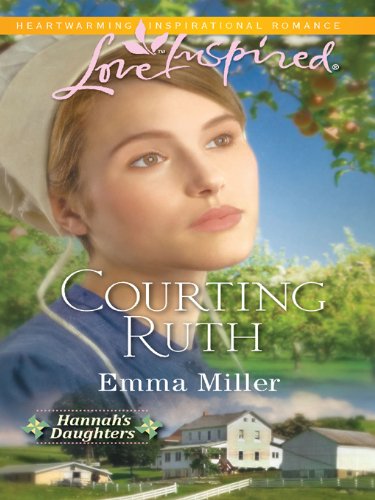
Amish widow Hannah Yoder prays her daughters will each find a husband someday. Still, sensible Ruth believes it's God's will that she stay home and help care for her younger sisters. But when a handsome young man comes to Kent County, Ruth starts to rethink her plans. Not yet part of the church, Eli Lapp is allowed to run wild. Yet something in Ruth's sweet smile and gentle manner makes him yearn to settle down—with her at his side. Can Eli convince her that their lives should be entwined together on God's path?
I ended up completely adoring this book, all of the characters were unique and realistic and I'm fairly certain I was grinning my head off when I finished reading it today on the bus. A simple plot for the people who live the simple life, but not entirely predictable. Ruth seemed a bit young for her age in places and some problems could have been resolved with a conversation, but I did love the setting, the family and all of the secondary characters. Definitely going to be reading the other books in the series.
READ: JULY 8 - 9, 2011
RATING: 7 OUT OF 10
This Christmas, Emily Merkle (call her Mrs. Miracle!) is working in the toy department at Finley's, the last family-owned department store in New York City. And her boss is none other than…Jake Finley, the owner's son.
For Jake, holiday memories of brightly wrapped gifts, decorated trees and family were destroyed in a Christmas Eve tragedy years before. Now Christmas means just one thing to him—and to his father. Profit. Because they need a Christmas miracle to keep the business afloat.
Holly Larson needs a miracle, too. She wants to give her eight-year-old nephew, Gabe, the holiday he deserves. Holly's widowed brother is in the army and won't be home for Christmas, but at least she can get Gabe that toy robot from Finley's, the one gift he desperately wants. If she can figure out how to afford it…
Fortunately, it's Mrs. Miracle to the rescue. Next to making children happy, she likes nothing better than helping others—and that includes doing a bit of matchmaking!
This Christmas will be different. For all of them.
I didn't enjoy this quite as much as Mrs Miracle but it was a lot better than A Cedar Cove Christmas. For a novella, this book included a significant amount of character development, enough to make me really care about the characters and their struggles. And as with Mrs Miracle, I really liked the quotes at the start of each chapter. Obviously, this is a fairly predictable, romantic Christmas tale but it didn't verge on being cheesy at any point, and had interesting secondary characters to keep the story original. My one complaint would have to be the fact that the main character agreed to buying her nephew a £250 Christmas present! The only time I've had a present that cost that much was when my parents bought me a laptop when I went to university, never as a child. Whatever happened to dolls and bricks and footballs? Although the rest of the message was good, this present seemed to matter far too much to the main characters and it didn't seem like a reasonable thing to be spending money on, especially when Holly was struggling financially. While I did really enjoy this story, the obsession with the expensive robots did irk me.
READ: JULY 5 - 6, 2011
RATING: 9 OUT OF 10
Amish widow Hannah Yoder prays her daughters will each find a husband someday. Still, sensible Ruth believes it's God's will that she stay home and help care for her younger sisters. But when a handsome young man comes to Kent County, Ruth starts to rethink her plans. Not yet part of the church, Eli Lapp is allowed to run wild. Yet something in Ruth's sweet smile and gentle manner makes him yearn to settle down—with her at his side. Can Eli convince her that their lives should be entwined together on God's path?
I ended up completely adoring this book, all of the characters were unique and realistic and I'm fairly certain I was grinning my head off when I finished reading it today on the bus. A simple plot for the people who live the simple life, but not entirely predictable. Ruth seemed a bit young for her age in places and some problems could have been resolved with a conversation, but I did love the setting, the family and all of the secondary characters. Definitely going to be reading the other books in the series.
* * *
READ: JULY 8 - 9, 2011
RATING: 7 OUT OF 10This Christmas, Emily Merkle (call her Mrs. Miracle!) is working in the toy department at Finley's, the last family-owned department store in New York City. And her boss is none other than…Jake Finley, the owner's son.
For Jake, holiday memories of brightly wrapped gifts, decorated trees and family were destroyed in a Christmas Eve tragedy years before. Now Christmas means just one thing to him—and to his father. Profit. Because they need a Christmas miracle to keep the business afloat.
Holly Larson needs a miracle, too. She wants to give her eight-year-old nephew, Gabe, the holiday he deserves. Holly's widowed brother is in the army and won't be home for Christmas, but at least she can get Gabe that toy robot from Finley's, the one gift he desperately wants. If she can figure out how to afford it…
Fortunately, it's Mrs. Miracle to the rescue. Next to making children happy, she likes nothing better than helping others—and that includes doing a bit of matchmaking!
This Christmas will be different. For all of them.
I didn't enjoy this quite as much as Mrs Miracle but it was a lot better than A Cedar Cove Christmas. For a novella, this book included a significant amount of character development, enough to make me really care about the characters and their struggles. And as with Mrs Miracle, I really liked the quotes at the start of each chapter. Obviously, this is a fairly predictable, romantic Christmas tale but it didn't verge on being cheesy at any point, and had interesting secondary characters to keep the story original. My one complaint would have to be the fact that the main character agreed to buying her nephew a £250 Christmas present! The only time I've had a present that cost that much was when my parents bought me a laptop when I went to university, never as a child. Whatever happened to dolls and bricks and footballs? Although the rest of the message was good, this present seemed to matter far too much to the main characters and it didn't seem like a reasonable thing to be spending money on, especially when Holly was struggling financially. While I did really enjoy this story, the obsession with the expensive robots did irk me.
* * *
READ: JULY 11 - 14, 2011
RATING: 6 OUT OF 10
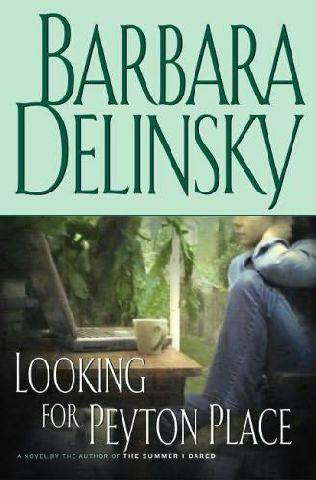
Grace Metallious, the author of PEYTON PLACE, a revolutionary novel about sex and secrets in small town America, inspired Annie Barnes to leave Middle River, the tight knit community that believes itself to have been Grace's model, and pursue a career as an author. Now, Annie's success has allowed her to distance herself from the world she left behind -- and from her family, who are still smarting from their decades-old associations with Grace's PEYTON PLACE. But after her mother dies under circumstances Annie can't help questioning, Annie returns to her home in New Hampshire to search for answers. When she discovers evidence of dangerous pollutants emanating from the local paper mill -- poisons she suspects contributed to her mother's fatal illness -- Annie finds herself butting heads with many of the town's inhabitants -- including her sisters, who are strangely apathetic about the incriminating evidence Annie discovers. All the while, Annie must war with the memory of Grace Metalious -- and the realization that not much has changed in small-town life since Grace wrote her groundbreaking book.
I'm afraid I didn't enjoy this as much as other Barbara Delinsky novels. It was mainly written in first-person POV from one of the most arrogant, self-assured main characters I've ever known, yet I still never felt like I got to know her properly. Barbara Delinsky has written some wonderful novels in third-person POV and I just don't think she can pull off first-person, it isn't in keeping with her style. And while the mystery was pretty interesting - although perhaps a bit too similar to the movie of Erin Brockovitch's life - the story didn't have the same saga and scandals of Delinsky's best novels. I think she tried to do something new with this book and strayed too far from her niche. I expect that those who are interested in Peyton Place and its history would enjoy this book more than I did, but I found the references a bit forced in places and the idea of Annie "conversing" with Grace was just too weird for me. I did want to keep reading to find out whether there was mercury poisoning, but I just didn't connect with the characters in this book.
* * *
READ: JULY 22, 2011
RATING: 8 OUT OF 10
Miriam Lapp, who left the Amish community in Pennsylvania three years ago, is heartbroken when her sister calls to reveal that her mother has died suddenly. Traveling home to Pennsylvania, she is forced to face the heartache from her past, including her rift from her family and the break up of her engagement with Timothy Kauffman.Her past emotional wounds are reopened when her family rejects her once again and she finds out that Timothy is in a relationship with someone else. Miriam discovers that the rumors that broke them up three years ago were all lies. However, when Timothy proposes to his girlfriend and Miriam's father disowns her, Miriam returns to Indiana with her heart in shambles.When Miriam's father has a stroke, Miriam returns to Pennsylvania, and her world begins to fall apart, leaving her to question her place in the Amish community and her faith in God.
Amy Clipston is one of my favourite Amish authors and the third book in her Kauffman Amish Bakery series was a excellent addition, but I felt like something was missing. The spark that had made me rave about A Gift of Grace and A Promise of Hope just wasn't there. It took me a while to figure out what it was about this book that had irked me, and ultimately I think it was the lack of communication between Miriam and Timothy. There were so many times when I wanted to grab them, sit them down in a locked room and make them talk everything out! While I realise that this book probably wouldn't have existed if they'd ever bothered to confront each other to begin with, the number of misunderstandings and missed opportunities did eventually get quite annoying. I just didn't connect with Miriam the same way I did with the heroines from the first two books in the series, and perhaps the lack of communication between her and Timothy contributed to this since it made her seem a bit immature in comparison. However, I did really enjoy reading this book (other that a few frustrating moments!) and it was quite impossible to put it down at times. Despite the issues I've mentioned, this was a good addition to the series and I'm looking forward to #4 and finding out what's happening to Rebecca's nieces. This is a lovely family and community to read about, and even if I didn't enjoy this book as much as the previous novels I'd still rate it 8 out of 10 for the compelling storyline and great characters.
* * *
READ: JULY 31 - AUGUST 2, 2011
RATING: 9 OUT OF 10
A dusty carved box containing two locks of hair and a century-old letter regarding property in Switzerland, and a burning desire to learn about her biological family lead nurse-midwife Lexie Jaeger from her home in Oregon to the heart of Pennsylvania Amish country. There she meets Marta Bayer, a mysterious lay-midwife who desperately needs help after an Amish client and her baby die.
Lexie steps in to assume Marta's patient load even as she continues the search for her birth family, and from her patients she learns the true meaning of the Pennsylvania Dutch word demut, which means 'to let be' as she changes from a woman who wants to control everything to a woman who depends on God.
I loved this book! The start of a fantastic series. I've only read one book from Mindy previously (Secrets of Harmony Grove) and I'd found the mystery to be quite complex and a little too dark for my liking, so naturally I was intrigued to see what her joint series with Leslie Gould would entail. While the complex storyline and mystery aspect remained, I felt far more connected to the characters in this book. It was fascinating to learn a bit about the Anabaptist history of the Amish (which is dealt with in more depth in #2) and trying to figure out the family tree was a lot of fun. A wonderful book about family relations and figuring out who you are and how your family defines you. I'd definitely recommend this book to Amish fans, particularly those who're looking for something different from the usual romantic storyline. Romance didn't really feature in this book, focusing more on the relationships between the women in the family and uncovering Lexie's past. So if you'd like to try an Amish novel but aren't a massive fan of romantic fiction, this is definitely the one to start with.
Beside Still Waters - Tricia Goyer
GENRE: AMISH
PUBLISHER: B & H PUBLISHING
PUBLICATION DATE: APRIL 15, 2011
RATING: 10 OUT OF 10
Born on the day of the buggy accident that took the lives of her two older sisters, Marianna Sommers has always felt that she never measured up to her lost siblings in the eyes of her parents. She has consigned herself to the fact that once she leaves her family home and marries the man God has intended for her, she can start her life anew, a life in which she isn’t constantly being compared to her deceased sisters. Hopefully this life will be with Aaron Zook, who has recently asked her to take a buggy ride home from a singing with him. But before they get the chance to start courting, Marianna’s father announces that the whole family will be moving to Montana, in an attempt to avoid losing any more of their children. With two daughters gone to be with the Lord and a son left to join the English world, her parents are desperate to hang on to their remaining children. A trial period living in Montana appears to be a viable solution, no matter how much Marianna objects. And although she is given the option of remaining in Indiana with her extended family, Marianna knows that her mother is expecting another child and decides to move to Montana, at least until her new sibling is born. But after an argument with Aaron over her choice to leave, and his failure to reply to any of her letters, Marianna starts to settle into her new life in Montana. Despite initial reservations about the lack of discipline in the Bishop-less community and the close relationships her family begin to forge with English neighbours, Marianna finds herself drawing closer to God in Montana. When the opportunity arises for her to return to Indiana and Aaron, will she take it, or choose to remain in the new life she has made for herself in Montana?
Although I’ve been long aware of Tricia Goyer’s presence in the Christian fiction market, Beside Still Waters was the first of her novel’s that I’d personally read. I was intrigued to see that she was straying from her usual historical writing and making a foray into the world of Amish fiction, and I’m pleased to report that this venture has been a definite success! Beside Still Waters has to be one of the most original Amish novels that I’ve read this year, in a location that has previously been unexplored in this genre. In observing the Sommer family moving from Indiana to Montana, readers are able to understand the nuances and differences that are present in Amish communities. While one community may shun all non-business relationships with Englishers, another may be open to friendships with their non-Amish neighbours. It was fascinating to see how the small, rural community in Montana differed from those often featured in popular Amish fiction set in Pennsylvania or Ohio. Even Marianna’s home community in Indiana had distinct differences. In a genre that is already becoming saturated, new Amish authors need to make their work stand out from the crowd, which Tricia has succeeded in doing through placing her characters in a new setting and a more liberal community.
One of Marianna’s main problems with life in Montana is the closeness to the English, particularly young Ben Stone, whose relationship with his Lord and Saviour challenges her pre-existing views of Englishers. Back in Indiana, she would never have been allowed to work and live so closely with outsiders who might cause her drift away from her Amish beliefs, but Ben actually ends up helping Marianna to develop her personal relationship with God. Although her friendship with Ben sometimes confuses Marianna and causes her to reconsider some of the rules she has always followed in her stricter community back home in Indiana, a connection begins to blossom between them. Her family and friends are cautious about her spending too much time with a young English man, but since the community is in such close, daily contact with local Englishers, their relationship does not seem too strange. Tricia’s observations on the ways that the Amish treat outsiders were particularly interesting. While some books focus purely relationships within Amish communities, and others show Englishers who come to “find themselves” in Amish country and end up converting to the faith, I felt that Beside Still Waters showed something completely different. Because their community is so small and rural, the Sommers’ nearest neighbours are Englishers and they often have to call on Ben for help in a crisis, rather than their Amish friends, because he lives closer and has transport. But it is also acknowledged that their home community in Indiana is much stricter, and Marianna’s friendship with Ben would never have been allowed to develop there.
In discussing this novel with my book group, my friends and I found ourselves considering which male protagonist we hoped Marianna would end up with – were we Team Aaron or Team Ben? While Aaron is your typical young Amish man, building a house for his future wife and family and attending singings, he fails to understand Marianna’s need to be with her family in Montana, and the two of them end up parting not on the best terms. I found his behaviour rather immature, and some of the events that transpired later in the book made me even more wary of him and his commitment to Marianna. On the other hand, Ben isn’t Amish but displays many of the qualities often displayed in Amish men. I personally found him to be a much more appealing character than Aaron, even if he lived a different lifestyle from Marianna. But considering that there are two more books in this series, will Marianna and her potential beaus come to mature in future instalments? I’m looking forward to discovering whether Aaron will grow up a bit, and whether Ben’s closeness to the Amish will make him consider becoming one of the community.
I’m pleased that Tricia Goyer has decided to begin penning novels for the Amish genre. If Beside Still Waters is a good example of her work then I believe that readers of this genre will quickly be adding her to their list of favourite authors. Tricia will be revisiting Montana in October 2011 with Along Wooded Paths, and I’m sure that many readers are eagerly awaiting this instalment in order to find out where the wooded path takes Marianna next in her life.
Review title provided by B&H Publishing.
Labels:
10/10,
2011,
amish,
b and h,
christian,
netgalley,
review copy,
romance,
tricia goyer
Thursday, 1 September 2011
The Amish Nanny - Mindy Starns Clark & Leslie Gould
GENRE: AMISH
PUBLISHER: HARVEST HOUSE
PUBLICATION DATE: JULY 1, 2011
RATING: 9 OUT OF 10
Ever since discovering that she was adopted, Ada Rupp has not been entirely content with life in her Amish community. While her long-term illness has stabilised itself, her mother still hovers over her, controlling her life out of fear that Ada may fall sick again. Still single and in her twenties, Ada hopes that she may have caught the attentions of Will Gundy, a close friend and widower with three children. But after rumours about Will and Leah Fisher begin to surface, Ada hangs all of her hopes on being appointed teacher of her community’s one-room schoolhouse. If she can’t have a family of her own, being a teacher would somewhat satisfy the longings of her heart. However, it appears that God has other plans for her, as soon after the teaching position is given to Leah, Will’s grandmother offers Ada the chance to visit her ancestral family home in Switzerland. An issue over the ownership of the land has arisen, resulting in the need for members of the two Amish families who own the land to travel to Europe in order to resolve matters. Will’s oldest daughter, Christy, will be travelling with them, giving Ada the chance to try out her teaching methods on the girl, who is still hurting from her mother’s death and refusing to learn anything at school. Will this chance to travel to Europe and act as a nanny to the daughter of the man she has come to love enable Ada to see God’s plan for her life? Or will it open her eyes to the adventures and temptations of the world, making it even more difficult to settle when she returns to her Amish community?
Having first been introduced to Mindy Starns Clark earlier this year when I read Secrets of Harmony Grove with my book group, I was pleased to see that she was choosing to focus on Amish fiction with her upcoming Women of Lancaster County series. I’d quite enjoyed reading Secrets of Harmony Grove, but had found it a bit dark in places and the mystery rather convoluted. As it turns out, this series is more to my liking. Mindy and Leslie – both established authors – team up together to write about the lives of women who are all somehow related to an Amish family in Pennsylvania. In the first book, The Amish Midwife, adopted Lexie travels to Pennsylvania after she discovers that this is where her biological family live. The Amish Nanny follows on from her story as her younger sister, Ada, comes to terms with the changes that have occurred in her life since meeting Lexie. While Lexie has found peace in her life after reconnecting with her Amish family, Ada no longer feels content in the life that she has always known. The Amish Nanny follows Ada’s journey to discover who she is and where God wants her to be in life.
Although they’re both very different characters, I loved Ada’s story just as much as Lexie’s. Mindy and Leslie have really stretched the Amish genre by including mysteries surrounding family trees and adoption, not to mention a wealth of information about how the Amish came to be in the United States. While the first book dipped into the history of the Anabaptists, I learned a lot more from Ada’s travels in Switzerland. Even I, a student of history who has read a lot about the religious upheavals in Europe during this period, still had a lot to learn about the Anabaptists and their persecution and subsequent emigration. This is definitely one to read if you feel that you’re getting bored with similar plots being repeated in Amish fiction, or would like something with a bit more depth. That said, you don’t have to be a historian to enjoy this book. Mindy and Leslie weave all of the information into the book in a way that makes it easy to understand and doesn’t detract from the story.
I would suggest that you might enjoy Ada’s story more if you’ve read the first book in the series, but a lot is summed up for those readers who choose to jump right in with The Amish Nanny. But fans of the series will be pleased to catch up with Lexie and her cousin Ella, who will be the protagonist of the third book. Ada also gets the chance to meet Giselle, her biological mother, who has been living in Switzerland for several years. While a lot of the book is spent focusing on the mystery of the ownership of Amielbach and locating the documents to prove this, Ada and Giselle have some healing to work through together. Ada really grows as a character throughout the book, and comes to define her identity not in terms of her family or her illness, but who she feels God is calling her to be. Although events in Pennsylvania have caused her to doubt her desire to be a teacher, wife and mother, her experiences in Switzerland help her to trust God’s will for her life. She’s helped by Christy, her charge on the trip, and Morgan, an English girl she meets on the journey to Switzerland. It was lovely to see Christy’s character also developing, as she slowly got over the fears that had emerged since her mother’s death. Morgan was a really fun character to read about as well, and I hope the authors may have plans for a cameo for her in future books.
The Amish genre is truly blessed to have Mindy and Leslie working to create new, unique fiction for its fans to enjoy. Their Women of Lancaster County series is likely to be enjoyed by all Amish readers thanks to its wonderful blend of mystery, family drama and romance. The Amish Nanny is a wonderful addition to the series and I hope that others will enjoy Ada Rupp’s story as much as I did.
Review title provided by Harvest House Publishers.
Monday, 15 August 2011
Leapblog Tag - I'm IT!

I WANT MY CHRISTIAN FICTION!
Tag - you're it! That's right, you've been chosen as someone very special and unique in our Christian Fiction Devourers Group on Goodreads! ...And we'd like to know more about you. So please share 7 unique/little known facts about yourself and the best book you've read in the past 7 months.
- I'm engaged to get married in July 2012, to my lovely Simon :)
- I grew up just outside of Edinburgh in Scotland, but now I live in St. Andrews, where I'm studying at university.
- I didn't leave the UK until I was seventeen. So far, I've only been to Europe and have visited Poland and Germany.
- My current summer job is working as a Customer Service Advisor for Scottish Water. (In short, I work in a call centre and deal with angry customers who have had their water cut off or have sewage overflowing into their garden...never a dull moment!)
- My guilty pleasure when it comes to reading is the Babysitters Club series by Ann M. Martin. I own about 50 of these books and would someday like to have collected the whole series for my daughters to read. If I'm blessed with sons then I hope to have some very lucky, bookaholic nieces!
- I'm slowly learning to knit, and have started by making squares which I hope to someday have enough of to make into a blanket. There's a charity shop in St. Andrews that sells lots of interesting wool for £1.49 per ball so I'm getting some interesting colours to blend together.
- Me and my fiance make sure that we spend one night a week with just the two of us, no matter how stressful our workload has got at university. We generally cook a meal together (i.e. Simon cooks and I sit on the sofa and drink wine and am occasionally called upon to chop some garlic or stir some food around a pan), share a bottle of Aldi's finest £2.99 wine and watch a film. But it's never yet got monotonous, so we'll be continuing this tradition next semester :)
My favourite book over the past seven months has to be Lilly's Wedding Quilt by Kelly Long. I've raved about this book that I reckon Simon could probably write an essay explaining why I love it so much! Check out my review here to see why I loved it so much.
I'm going to tag the lovely Lorie of For The Love of Reading, because I know that she enjoys similar books to myself!
Sunday, 14 August 2011
A Vision of Lucy - Margaret Brownley
GENRE: HISTORICAL ROMANCE
PUBLISHER: THOMAS NELSON
PUBLICATION DATE: JUNE 28, 2011
RATING: 9 OUT OF 10
Photography may not seem like a popular career choice in 1882, particularly for a woman, but Lucy Bradshaw is determined to make a living with her camera. However, all of her attempts to impress the owner of the local paper fail drastically, the final one culminating in her falling from a tree on to a stage-coach, which happened to be in the process of being robbed. Following her disastrous shenanigans, no one in Rocky Creek, including Lucy’s own father, is convinced that photography is an aid to journalism or a fitting pursuit for a woman. Her father would much rather that Lucy cultivate the hobbies and interests more appropriate for a young lady and stop getting herself into scrapes that bring embarrassment on him and the other residents of the town.
Lucy’s last failed attempt at taking a photograph for the newspaper brings her into contact with David Wolf, an aptly named supposedly “wild” man living on the outskirts of Rocky Creek who has been shunned throughout his life because of his mixed race. In the confusion between Lucy witnessing a robbery and running into David, her new friend ends up arrested and badly harmed, but not capable of receiving medical aid in a town that believes him to be a half-breed criminal. Carefully, Lucy and her younger brother hide David in the storeroom of the church and nurse him back to health. Lucy has no idea what brought David to Rocky Creek in the first place, but she is determined to help him, even if it endangers her reputation further. But will David accept her help?
I expected this book to be a standard historical romance, but was pleasantly surprised to discover how much action and mystery it contained. Not to mention a colourful array of secondary characters and a vividly described town. I came into this book completely fresh, not having even heard of this series before, but managed to catch up with the characters from the previous books very easily. In fact, although the protagonists from the first two Rocky Creek novels did feature briefly in A Vision of Lucy, very little was revealed about the events in the earlier books, meaning that I can still go back and read the previous novels without having the outcomes spoiled. So if, like me, the beautiful cover of this book catches your eye but you’ve not read the others in the series, it is entirely possible to jump in and be swept away by the wonderful characters of Rocky Creek with little confusion.
When I initially started reading A Vision of Lucy, I only intended to read the first chapter before going to bed. This plan proved to be entirely impossible once Lucy fell out of a tree on to the stagecoach below that was in the process of being robbed, frightening the horses and causing them to gallop off, dragging the stagecoach behind them – with Lucy still hanging on. Like the horses, this book sped along at a fair sped with never a dull moment, making it very difficult to even put down for a moment. Margaret inserted an appropriate amount of mystery and adventure into the book, which kept it from being a standard romance. There was also a fair amount of mischief and trouble on Lucy’s part – from falling out of trees to burning down buildings –and her antics kept me very amused and I found myself giggling all the way through this book.
Lucy has to be one of the most original female protagonists I’ve had in a while, and provided plenty of humour without her escapades seeming at all forced. Sometimes it can seem as if accident-prone characters are being pushed to provide amusement for the readers, but I never felt this about Lucy. Her endeavours to improve her town, help David and achieve something through her photography were always well-meant, even if the outcomes were less than successful. I loved her relationship with David and the chemistry they had together, starting with him kissing her to make her stop talking. He was a bit of a distant character, due to the problems he’d encountered throughout his life which he allowed to affect his present situations and relationships. But ultimately I think their very different personalities ended up working well together. Their romance was made more unusual by the fact that Lucy and David had to stand against those who disapproved of interracial relationships. Both of them faced adversity from some members of the town, which hindered their relationship from progressing as both of them would have liked. I don’t think I’ve read many romances that address issues of interracial relationships in the nineteenth century, so this was a particularly interesting aspect of the novel.
The third Rocky Creek Romance is an absolute delight, even for someone who hasn’t read the rest of the series. The relationship between an accident-prone photographer and a “wild”, mixed-race carpenter unfolds to a background of intrigue and mystery. Readers of historical romances won’t be disappointed by A Vision of Lucy, and those who are looking for something a bit more unconventional should definitely be on the lookout for more from Margaret Brownley.
Review title provided courtesy of Thomas Nelson.
Subscribe to:
Posts (Atom)